
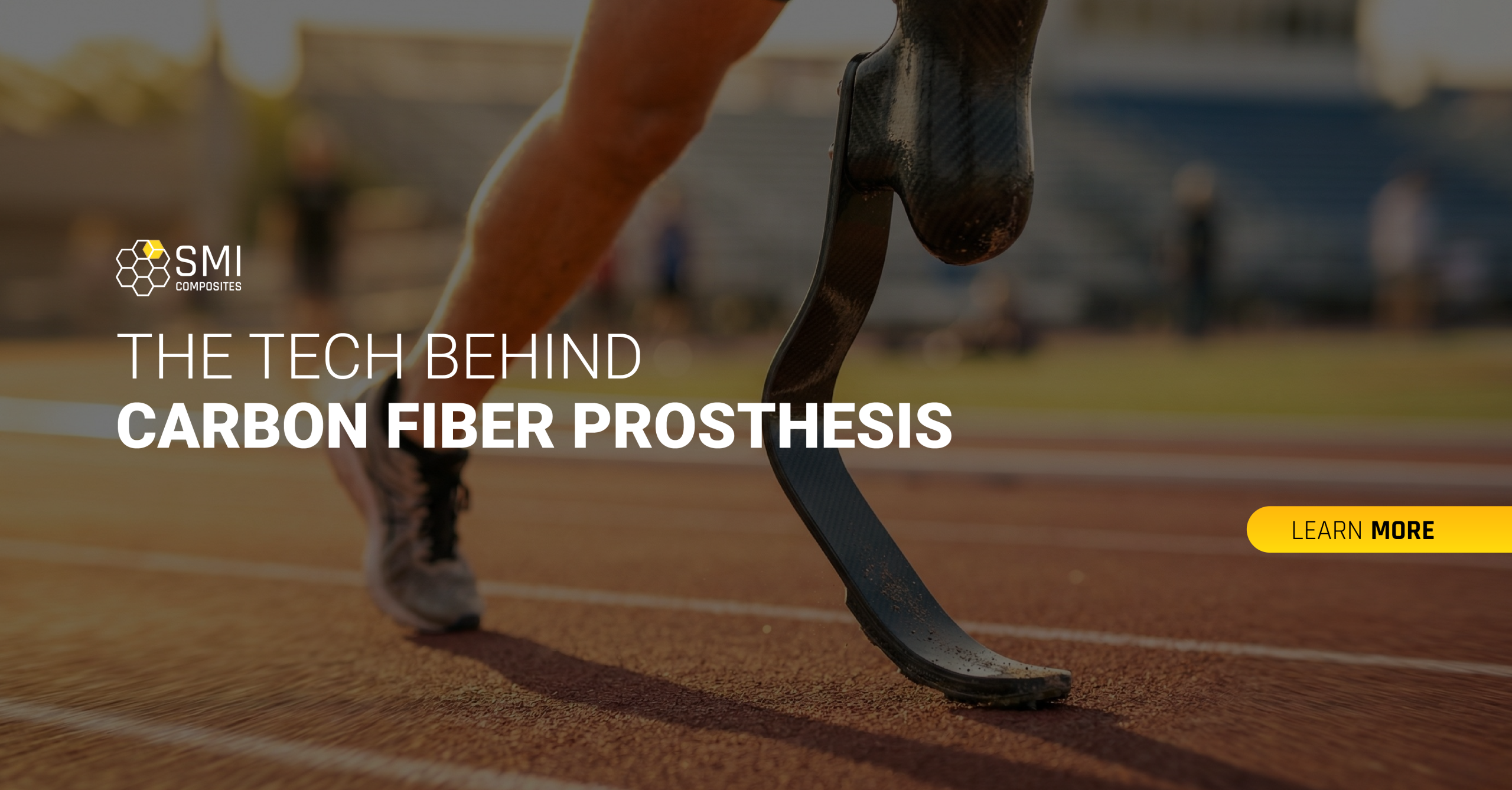
The core idea behind a strong carbon fiber prosthesis is simple: better materials and a controlled build process lead to better function. Here at SMI Composites, we support this every day through careful design, reliable production, and a commitment to quality across all industries we serve. This includes medical, aerospace, defense, automotive, and sports.
Our work is built on open communication, strong process control, and premium customization. These same principles guide how modern prosthetic limbs are made.
In this blog post, we will explain the materials, layup steps, and curing methods that help create dependable prosthetic components.
The Materials Behind the Build
Carbon fiber technology is popular because it offers strength and low weight. These two qualities are important for anyone who relies on a prosthetic device. We use woven and unidirectional carbon fiber, along with other composite reinforcements, to match the needs of each design.
The fibers are combined with resin systems that provide structure once cured. Engineers choose the exact combination based on comfort, load, and performance goals. This careful material selection avoids excess weight and supports long-term durability.
How Layup Shapes Performance
The prosthetic manufacturing process depends on accurate layup. Each layer of carbon fiber is placed in a specific direction to support movement and stability. A foot plate, socket, or support component often needs different fiber directions to manage pressure safely.
Our background in aerospace, medical devices, and defense production gives us strong control over this step. We document every layer, use steady tension, and apply consistent pressure. This helps produce parts that remain stable under daily use and repeated force.
Why Curing Matters
Curing turns soft fiber layers into a solid structure. Heat and pressure complete the reaction between the resin and fibers. This step locks everything into place.
We use ovens and autoclaves based on the needs of the part. Autoclave curing delivers high pressure and removes air pockets. Oven curing works well for parts that do not need extra compression.
Both methods give steady results when paired with good process control. The outcome is a smooth, reliable surface and strong internal structure.
The Role of Advanced Prosthetic Materials
As advanced prosthetic materials improve, the final device becomes easier to use. Better resins, cleaner fiber weaves, and steady inspection points all support a safe and efficient final product.
At SMI Composites, we apply these standards across every industry we serve, from radiation testing equipment to military components. The same focus on accuracy and repeatability helps support patients and clinicians who need dependable outcomes.
The Tech Behind Carbon Fiber Prosthesis
All in all, a great carbon fiber prosthesis starts with strong materials, accurate layup, and a clean curing process. These steps lead to comfort, durability, and confidence for the user. SMI Composites supports this through strict quality control, open communication, and reliable production.
If you need a partner that understands advanced composite design and can guide your project from concept to delivery, we are ready to help. Contact our team to discuss your next build and see how our process can support your goals.
