
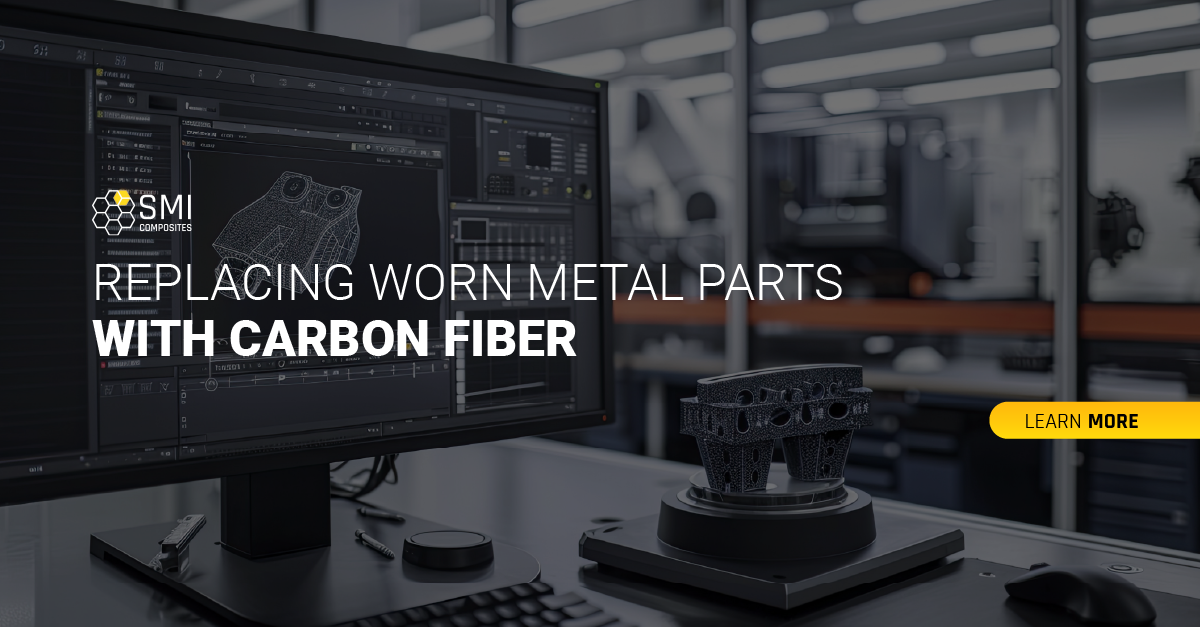
Older metal assemblies can become heavy, worn, and costly to maintain. Replacing them with carbon fiber can improve performance while reducing weight.
At SMI Composites, we use reverse engineering to study existing parts and create new composite versions. We look at the original part, how it is used, and what it needs to do. Then, we develop a carbon fiber design that fits those requirements.
The goal is simple: create a lighter replacement that continues to perform as needed.
Start With the Original Part
The first step is to understand the existing metal assembly. We examine its size, shape, connection points, and overall condition.
We also look at how the part is used. Knowing what forces and conditions it faces helps us determine what the replacement needs to handle.
The original part provides a useful starting point. We can identify important features that need to remain in the new design while finding areas where a composite material can improve the part.
Use Reverse Engineering to Build a Better Replacement
Reverse engineering helps us move from an existing metal component to a new carbon fiber design. Rather than simply copying the original part, we can look for ways to improve it.
Carbon fiber can provide high strength while weighing less than many metal alternatives. The U.S. Department of Energy notes that lightweight materials such as carbon fiber composites can help reduce vehicle weight.
A successful metal to composite conversion still needs to meet the requirements of the original application. Dimensions, mounting points, strength, and other important features must all be considered during the design process.
Plan the Carbon Fiber Layers
Carbon fiber parts need the right amount of material in the right places. Our team considers how the part will be used and where it needs additional support.
Structural ply scheduling helps determine how carbon fiber layers should be arranged. Some areas may need more layers, while others can use less material.
Careful planning can support weight reduction engineering without simply removing material from the part. The aim is to create an efficient design that provides the required strength and performance.
Choose the Right Manufacturing Process
Once the design is complete, the next step is choosing how to manufacture the replacement. SMI Composites offers several manufacturing methods, including:
- Autoclave curing
- Out-of-autoclave curing
- Bladder molding
- Compression molding
- Cast molding
The right process depends on the part, its design, and the number of components required. NASA highlights the use of carbon fiber composites in lightweight aerospace structures.
Our team works with customers throughout the process. We focus on open communication, quality control, and consistent production from design through delivery.
Build Your Carbon Fiber Replacement With SMI Composites
Replacing a worn metal assembly with carbon fiber can provide a practical way to reduce weight and update an existing design. The process starts with understanding the original component and its purpose.
At SMI Composites, we use reverse engineering to help customers develop composite replacements for demanding applications. Our experience covers aerospace, defense, automotive, medical, and sports and recreation projects.
If you have an existing metal component that could benefit from a lighter alternative, contact our team. We can help you explore the possibilities of a carbon fiber replacement.
