
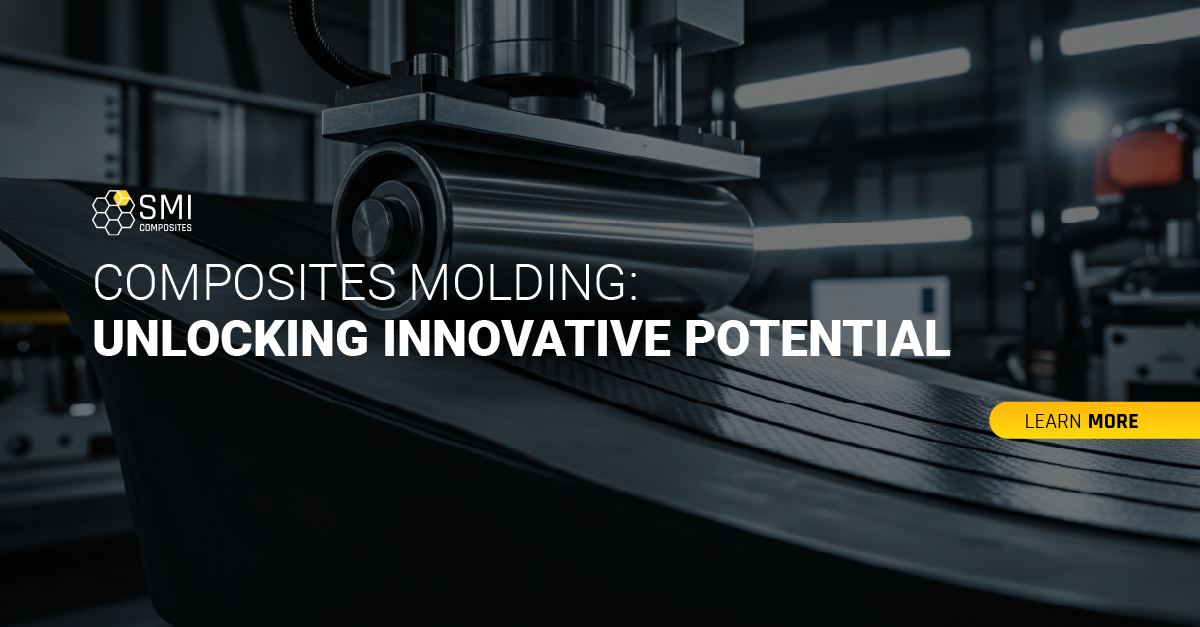
Composites molding transforms raw materials into high-performance components used across aerospace, automotive, defense, and medical industries. By combining advanced resins with reinforcing fibers, manufacturers achieve strength-to-weight ratios that traditional materials simply cannot match. These techniques continue to evolve, opening new doors for design complexity and production efficiency.
You’ve got a design that demands precision. The geometry is complex, the tolerances are tight, and the stakes leave zero room for error. Whether it’s a component destined for a fighter jet or a life-saving medical device, missed deadlines and parts that don’t meet spec aren’t setbacks; they’re disasters.
That’s exactly why mastering the latest innovations in composites molding has become non-negotiable for engineers who refuse to compromise.
What is Composites Molding?
Composites molding involves shaping materials composed of two or more constituent parts, typically a fibrous material that provides strength and a matrix that binds the fibers together. The dynamic intersections of these materials lead to enhanced mechanical properties.
Innovative Molding Methods Transforming the Industry
The molding industry trends indicate a shift towards advanced composites techniques that optimize production efficiency and sustainability. Techniques such as:
- Resin Transfer Molding (RTM): This method allows for the integration of complex geometries while minimizing waste, and it efficiently infuses resin into predefined molds, ensuring a high fiber-to-resin ratio
- Compression molding: Used primarily for thermoset materials, this technique reduces cycle times and enhances precision in producing consistent parts
- Vacuum-Assisted Resin Transfer Molding (VARTM): By utilizing vacuum pressure, VARTM allows for better control over material flow, resulting in superior surface finishes and a reduction in voids
These innovative molding methods not only push the boundaries of what is possible with composite materials but also adhere to evolving environmental standards.
What Are Practical Tips for Effective Composites Manufacturing?
To truly harness the potential of composites molding, manufacturers need to adopt best practices tailored for their unique production environments.
Material selection is the critical first step. Each application demands specific properties, whether that’s tensile strength, weight reduction, or thermal resistance, and choosing the wrong material early can compromise the entire project.
From there, process optimization becomes an ongoing priority. Regularly evaluating and refining your molding process improves cycle times without sacrificing quality. Therefore, strategic automation can deliver significant returns over time.
Equally important is investing in your team. Ensuring staff are well-versed in the latest techniques and equipment drives innovative problem-solving and consistently higher-quality output.
What is the Horizon of Composites Molding?
Looking ahead, the composites molding landscape will continue to evolve. Emerging trends such as smart materials, which adapt to environmental changes, and biocomposites, made from renewable resources, are set to redefine possibilities.
Ready to Push the Boundaries of Composite Innovation?
From compression molding and bladder molding to autoclave curing and beyond, composite molding continues to redefine what manufacturers can accomplish. The techniques and innovations covered in this article represent the cutting edge of what is achievable when engineering expertise meets advanced materials science.
SMI Composites delivers that expertise from a 122,000 sq ft facility equipped with multiple computer-controlled autoclaves. Along with an 8,000 sq ft temperature-controlled cleanroom, and twin composite presses capable of cure cycles as short as three minutes. That combination of scale, specialization, and precision is rare in the industry.
So, request a quote today, and let’s get your next breakthrough started.
