
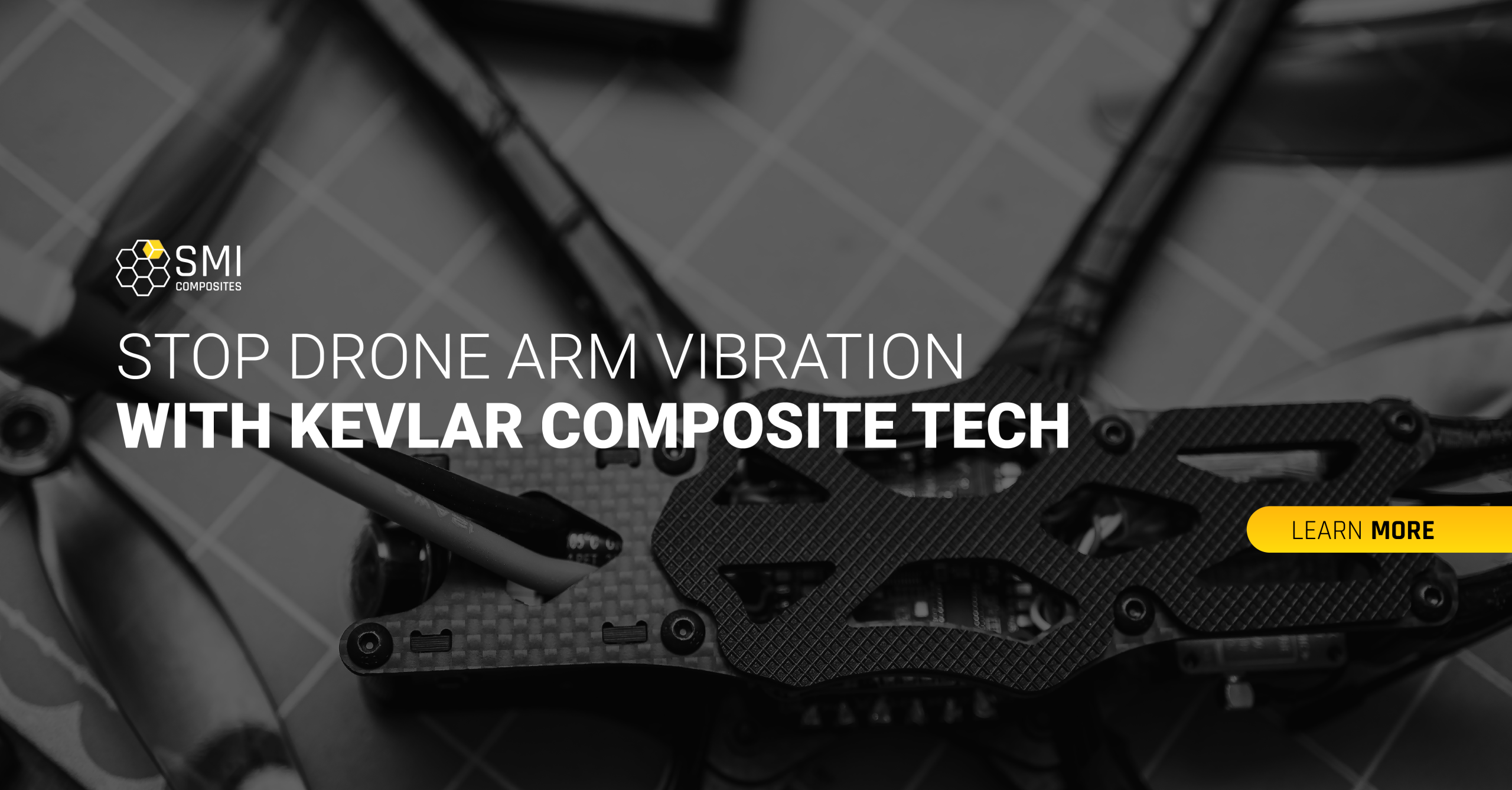
Drone arm vibration can shorten component life, reduce flight stability, and affect payload accuracy. A Kevlar composite frame helps absorb damaging vibrations while maintaining strength with minimal added weight, making it a smart choice for demanding UAV applications.
The International Organization for Standardization introduced ISO 5309:2023 to standardize vibration testing for small unmanned aircraft, according to the International Organization for Standardization. Kevlar composite materials help address that challenge by reducing harmful vibration while keeping drone frames lightweight and strong.
Constant motor vibration can affect flight stability, electronics, and structural life. This guide explains how Kevlar composite technology improves vibration control and supports more reliable UAV performance.
Can Kevlar Composite Reduce Drone Vibration?
Yes. Kevlar composite naturally dampens vibration better than many traditional structural materials. That helps reduce the high-frequency oscillations produced by motors and propellers before they spread through the airframe.
Better vibration control can improve sensor accuracy, protect onboard electronics, and create a smoother flight. It also reduces long-term stress on the frame and connected components.
Why Does Drone Frame Material Matter?
Frame material directly affects how a drone handles vibration, weight, and repeated flight loads. A poor material choice can increase fatigue, shorten service life, and reduce overall performance.
Kevlar composite offers a balance of strength, low weight, and impact resistance. Those qualities make it well suited for demanding UAV applications where reliability matters most.
Reduce High-Frequency Vibration
Motor vibration can quickly travel through a drone frame and affect sensitive equipment. Kevlar fibers absorb and dissipate vibration energy more effectively, helping maintain high-frequency vibration isolation during demanding flights.
Key benefits include:
- Smoother flights
- Better stability
- Reduced resonance
- Protected electronics
Improve UAV Harmonic Damping
UAV harmonic damping limits resonance before it damages structural components. Kevlar composite helps reduce vibration transfer, creating a more stable airframe for improved control and reliable performance.
Better damping also protects onboard systems from repeated stress. That allows drones to maintain accuracy over longer operating periods.
Increase Drone Chassis Longevity
Continuous vibration accelerates wear on fasteners, joints, and structural members. Composite fatigue resistance allows Kevlar composite to withstand repeated loading with less long-term damage.
Long-term advantages include:
- Longer lifespan
- Lower maintenance
- Fewer repairs
- Greater reliability
Protect Industrial Payload Frames
Industrial payload frames often carry expensive cameras, LiDAR units, or inspection sensors. Reducing transmitted vibration helps improve data quality while protecting valuable equipment from unnecessary stress.
Stable structural performance also supports more consistent operation in challenging environments. That improves confidence during demanding commercial missions.
Balance Strength and Weight
Drone designers need materials that are both lightweight and durable. Kevlar composite delivers excellent impact resistance without adding unnecessary mass.
Key performance gains include:
- Lower weight
- Better efficiency
- Higher durability
- Longer missions
Why Kevlar Composite Is a Smart Choice
A Kevlar composite frame helps reduce harmful vibration while delivering the strength and durability modern UAVs demand. Better vibration control protects sensitive components, improves flight performance, and supports longer service life.
Complex composite parts require more than strong materials; they need proven engineering, advanced manufacturing, and precise process control. SMI Composites supports projects from design through customized tooling, using autoclave and out-of-autoclave curing, compression molding, and bladder molding to deliver high-performance components across aerospace, defense, automotive, medical, and other industries.
Contact us today to discuss your next composite manufacturing project and request a comprehensive quote.
